The Loneliness That Led Me Home
This isn’t a teaching post — it’s a piece of my story. A reflection on loneliness, healing, and the quiet work of learning that being enough doesn’t come from others, but from within.
Sometimes we forget that those who guide others have walked through their own darkness too. This part of mine, I share with love — for anyone still finding their way home to themselves.
Today I came to a realisation.
For so much of my life, I’ve been chasing the feeling of being enough — and carrying the loneliness that comes with it.
From the age of twelve, after my father passed, I started reaching for anything that could numb the pain — cigarettes, alcohol, cannabis, anything that quieted the ache I didn’t yet have words for.
Those were some of the hardest years of my life. I was facing the wrath of my mother and sister — two peas in a pod — and I felt like I could never do right by either of them. I searched for the love and compassion that only my father had ever shown me, but it was nowhere to be found. Those years shaped my attachment to love. I learned early that affection could vanish without warning — that connection was something to chase, to earn, to hold onto tight before it disappeared. It made trusting love feel unsafe and being alone feel unbearable.
So I learned to cope the only way I knew how: by dulling the pain, hiding behind the smoke and the haze, trying to disappear inside it.
I stopped the cannabis when I became pregnant with Jaedon, twenty-six years ago, and stayed free of it for decades. When Jaedon came, I found purpose again — something real to pour my heart into, something that gave meaning to all the pain I’d carried. For the first time, I wanted to build, to nurture, to become more than what I’d survived.
Throughout my journey, I’ve always poured my energy into striving — trying to give my kids everything I wished I’d had.
Better birthdays, a nicer home, little surprises that said you’re loved.
Deep down, I was also trying to prove that I could be enough — that I could create the kind of life I once dreamed of. But the belief that I wasn’t good enough shaped more than just how I parented — it shaped who I chose to love.
That wound led me into relationships that reflected it back at me, again and again. I was a magnet for the very pain I was trying to outgrow. My attachment wounds played out like echoes — craving closeness yet bracing for rejection, mistaking intensity for intimacy. Each relationship mirrored the ache of wanting to be loved, while confirming the fear that I never truly would be.
Partners — including the fathers of my children — who gaslit, manipulated, and twisted reality until I doubted my own mind. The kind of people who could sense the crack in my self-worth and wedge themselves inside it.
There were times I truly thought I was going mad. The emotional push and pull, the confusion, the exhaustion — it wore me down.
My mental health took hit after hit, and I often felt invisible even while being told I was “too much” — because in my pain, I couldn’t see that by clinging so tightly to being understood, and defending my truth so fiercely, I was keeping myself in the fight, when what I really needed was to understand myself.
There are many more stories to tell — moments that explain the loneliness I felt. Times of feeling useless through fibromyalgia and what I was told were degenerative back issues. Times of vulnerability that are unthinkable to mention.
But through it all, one thing never wavered:
I never stopped giving my children space to grow.
I never stopped showing them love, no matter how broken I felt inside.
Even when I didn’t believe I was enough, I wanted them to know they were.
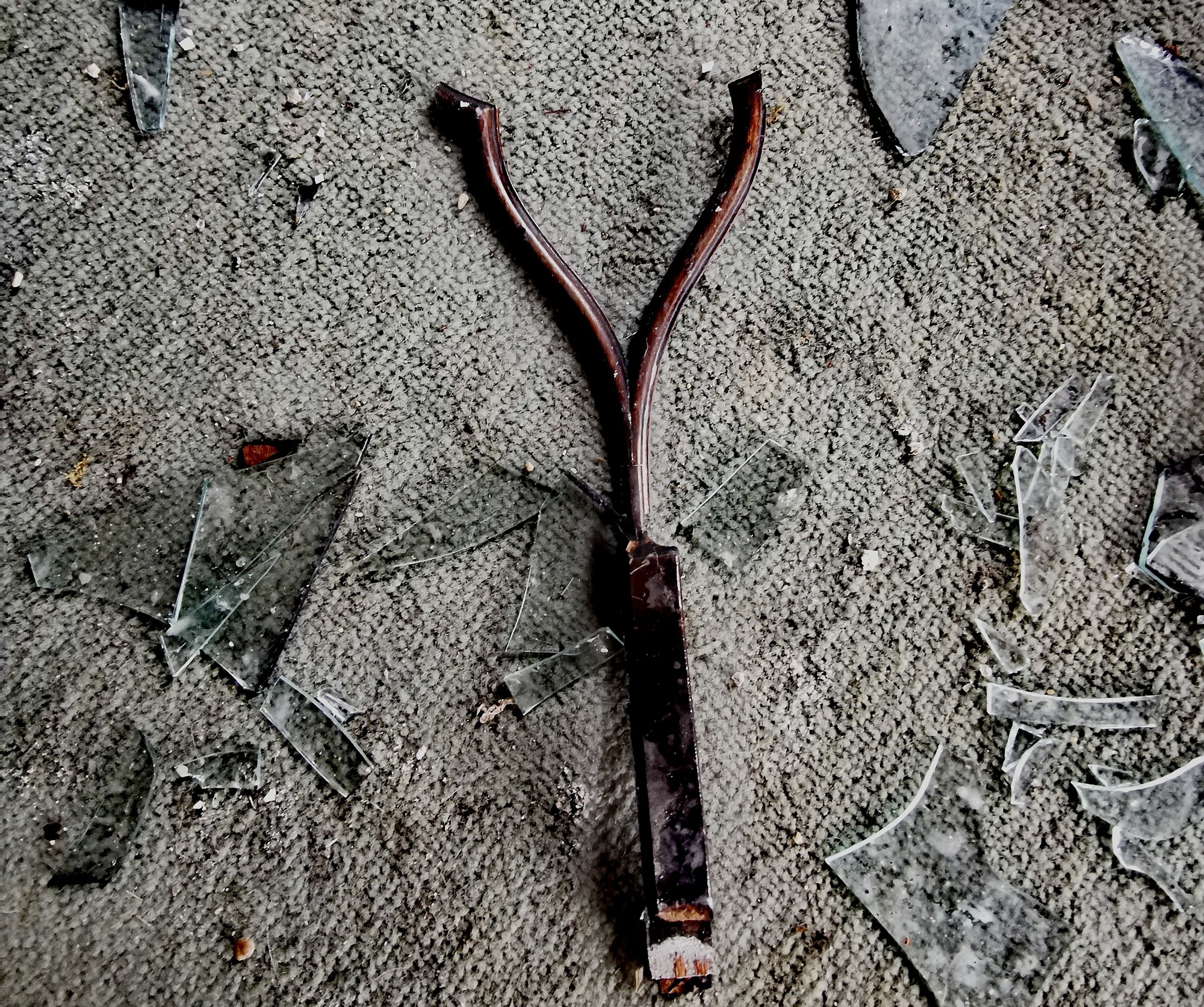
About twelve years ago, my world fell apart. My partner at the time destroyed my home — and me, in the process. Thankfully, my children weren’t there that night. The next day, friends helped me repair the furniture, hide the bruises, and mask the cracks so they would never know what had happened. I thought I could contain the damage, protect them from the truth of why he was no longer around.
But months later, everything unravelled again when my best friend betrayed my trust and told my ex-husband lies — claiming I was still with him. His reaction was to keep my children from me, and I had to go to court, fighting the hardest battle of my life just to bring them home.
Something in me broke then — a part of my heart I’ve never fully retrieved.
And yet, as painful as it was, I can see now that it was the breaking that became my awakening. Without that darkness, I wouldn’t be the woman I am today.
Slowly, clumsily, but with honesty, I began to rebuild. I started to see the patterns that had been running my life, the beliefs that had kept me small. I pulled myself from the victim mentality I’d been trapped in and realised that the only thing I could truly change was within me.
That was when my real journey began.
Again, there are stories to tell here — working through illness and operations where loneliness hit hardest. Building myself up at work, only to be torn down; having part of my dignity stripped when I was asked to work beneath someone I had personally trained. Supporting my children through their own difficult chapters, holding them through heartbreaks and transitions.
Then came Jaedon leaving the nest to follow his dream of becoming a ski instructor in Canada. As proud of him as I was, a little part of mine and Blu’s hearts went AWOL as our little family unit changed shape.
And five years ago — right around the time the anticipation of the full empty nest began to show its head — I picked the cannabis back up, along with cigarettes. This time, it was to fit into my newly found festival scene. I can see that now; it echoed so much of my younger years. I also told myself it helped with the anxiety, the silence, the strange in-between space of motherhood nearly ending.
Then my mum became ill — lung cancer. Ours had never been an easy relationship. For as long as I can remember, she was the reason I believed I wasn’t good enough — every word, every silence, every comparison planted that seed. Facing her illness pulled me into the deepest part of my healing: the mother wound.
Four years ago, when Blu, my youngest, moved to her father’s after a row during the pandemic — and Jaedon stopped communicating too after I voiced my fears for their safety because of my awareness and beliefs — it tore open the mother wound I’d been working through, this time questioning me at my core as a mother.
Even healing can slip back. I slipped — the haze, the self-doubt — because the silence was just so loud. At that point, the cannabis and smoking became another way to soften the ache of the house growing quieter.
But somewhere in that stillness, another truth began to emerge. I realised I had to loosen my attachment to my children — to accept that they were on their own paths now, living the lives their souls came here to live. I had done my best with what I knew at the time. Loving them didn’t mean holding on; it meant letting go with grace, trusting that love would find its way back in its own time.
I’d already been through the kind of loneliness that comes when the kids went to their dad’s — that gut-punch emptiness where I felt like a piece of me was missing. But nothing compared to this. I thought I’d be ready. I told myself I was proud, that I’d raised independent, capable kids — that this was what all the years of effort were for.
But when the house went still, I crumbled.
I remember standing in Blu’s empty room after the last box was gone, staring at the bare walls, and feeling something inside me collapse. It wasn’t loud or dramatic. It was just this quiet breaking — a hollow where noise used to live.
I’d walk down the hallway and pause outside her door like muscle memory, expecting to hear laughter, music, chaos and look at my messenger daily hoping for a message from Jaedon.
Instead, there was only stillness.
That’s when I moved to Glastonbury — alone — and began what became my intensive healing journey. I arrived with friends’ promises to visit and the belief that I was already part of the community I’d glimpsed from afar. I thought this would be the place I could finally find me — the true version of myself that was good enough all along.
And in many ways, I did. The healing went deep — deeper than I expected — and forced me to meet the parts of myself I’d hidden even from me.
That’s when the loneliness deepened into something I’d never known before. It wasn’t just missing my kids — it was the ache of having no one to share the small, beautiful, ordinary things with. No one to tell when something funny happened, when I needed someone to hold space for me, when I just needed someone to say, I get it.
Birthdays, Christmas mornings, small victories, quiet tears — they all landed in silence.
The drinking came and went throughout those years too — mainly light, but on occasion heavier when the ache felt unmanageable. It lingered until about a year ago, when I finally connected the dots: it wasn’t helping me cope; it was keeping me from feeling. And once I saw that clearly, I couldn’t unsee it. So I let it go.
As I worked through my wounds, my thoughts processes changed, as did my outside world. I started to fill that space with activity. I cleaned, rearranged, and decluttered my home, determined to make it peaceful — not for guests, but for me. For the first time, I began keeping it that way because I finally believed I deserved to live in a space that felt cared for.
But decorating and gardening were harder. Apart from the distant reminder of horrific back problems, doing it alone — with no one to bounce ideas off — made it feel heavy. Some days I’d still buy little things — a lamp, a cushion — hoping they might fill the void. They never did. But I understand now that it wasn’t about the objects. It was about wanting to feel worthy of the beauty I was creating.
There’s a lot that happened on my intense healing journey from this point — including the slow rekindling of contact with my children — until the call came: Mum was on end-of-life care. I knew I had to be there.
After a three-day scramble to find money, get a passport, and travel back to Canada after ten years apart, I knew holding the hand of the woman who gave me birth — the woman I was so grateful to for the lessons she had taught me — as she passed, wasn’t about closeness; it was about closure. In that moment, none of the old stories mattered. All that was left was compassion — a love big enough to let her go in peace. Offering forgiveness in that room wasn’t for her approval; it was for me to release it all — the final proof of how far I’d come.
Clearing her house afterward — every last object, every memory — broke my heart in ways I still can’t quite name.
But I stayed strong.
I faced it.
I didn’t run.
I stopped smoking cigarettes and cannabis again six months later — a promise to her, but more so to myself.
When I came home nearly three years ago , I thought I was okay. I threw myself into studying, into growing, into creating something meaningful. I planned to build a business to support others in the ways I’d once needed that support myself — because I know how lonely it feels to walk through that kind of darkness without a guide or outside support.
I have done this, and I love offering healing and space to those walking through their darkness. But with this, I am now faced with other shadows resurfacing — old echoes of not good enough I hadn’t seen in years.
They come tied to lack mentality, to that quiet fear that there’s never quite enough — time, money, love, worth. I still catch myself taking things personally sometimes, reading rejection or judgment where there’s really just silence. It’s an old reflex, a leftover from years of feeling unseen.
Imposter syndrome creeps in too, whispering that maybe I’m not capable like others offering the same — not enough to lead others on their journey.
And yet, even as those doubts rise, I can see them for what they are: pieces of the same story I’ve been rewriting all along. And this time, I meet them differently. I use what I’ve learned — the self-awareness, the tools, the wisdom that came from walking through my own fire. I remind myself that I am no longer that girl who needed others to tell her she was enough.
Now I can hold my own heart with compassion, give myself grace when the old wounds whisper, and keep showing up anyway.
I’ve also learned not to make assumptions — to pause before creating stories in my head that my heart doesn’t deserve to believe. That simple awareness shifts everything; it brings me back to truth instead of fear.
And as I keep choosing presence over reaction, I notice my vibration changing too. The more grounded and accountable I become, the more aligned I feel with a timeline that honours peace, purpose, and authenticity. I no longer chase what isn’t mine — I attract what meets me where I truly am.
I also know now that I’m the one who holds the choice to shift my timeline. Change doesn’t arrive from outside — it begins in the moment I decide to act differently. If I always do what I’ve always done, I’ll stay in the same loop. But when I choose differently, even in the smallest ways, the energy shifts, and life begins to meet me on that new frequency.
And through it all, I remind myself that doing my best — with integrity, honesty, and heart — is enough. I may not always get it right, but I always come back to my intention: to live truthfully, to show up with love, and to align my actions with the person I’m still becoming.
My past stories are just that — stories. The conditioning of my mind is what makes me spiral and keeps me from my highest timeline. Catching that process by observing my feelings and transmuting my thoughts is what stops me spiralling down.
I’ve learned to take accountability for my nervous system too — to notice when I’m dysregulated, when old fear responses rise, when my body starts to brace for what’s no longer happening. Instead of abandoning myself there, I slow down, breathe deeper, move gently. I remind my body that we’re safe now.
I know how to ground myself in stillness, to breathe through the ache instead of hiding from it. I’ve learned that vulnerability doesn’t make me weak — it’s what allows me to connect honestly, both with myself and with others. Every time I choose to love myself through the doubt, I strengthen the same compassion I offer to those I support.
That’s the gift of all of this: I no longer just talk about healing — I embody it, even on the messy days.
I still have days when the loneliness returns like an old familiar ghost. When I long for someone to care enough to call, to notice, to simply say, I see you. But I’ve learned to sit with it instead of run from it. To fill the quiet with music, movement, light — and to reach out even when it feels vulnerable.
Loneliness, I’ve realised, isn’t a weakness; it’s a reminder of how deeply I still want to connect, how much love I still carry.
I think part of why loneliness hits so deeply is because connection is a primal need — something written into us for survival. We were never meant to do life in isolation. Once, communities and generations lived side by side, raising children together, caring for elders, sharing the weight of it all. Somewhere along the way, we lost that closeness. The modern world separated us — made independence the goal, when what we really crave is belonging. I think that’s why loneliness feels like such a deep ache — because at its root, it’s not just emotional, it’s ancestral.
I haven’t found all the answers.
I don’t think I ever will.
But maybe healing isn’t about reaching a point where the ache disappears. Maybe it’s about letting it live beside you — not as a wound, but as proof that you still care deeply.
Because even in the loneliness, I’ve learned something:
I am still here.
Still showing up.
Still trying.
Still enough — even when it doesn’t feel like it.
There is no higher force blocking me from my highest timeline — only me, and where I focus my energy. My choices, my responses, my thoughts: these are what shape the reality I walk into. The more I observe the choices I make and how they affect the world around me, the more I notice synchronicities, and the more empowered I feel.
I may walk alone at times, but I no longer walk lost. Every step now comes from love — the kind I finally learned to give myself.
And if you’ve ever felt this kind of loneliness too, know that healing doesn’t erase it — it just teaches you how to hold it with gentleness, until connection finds you again.
My realisation is this:
Loneliness doesn’t mean I’m broken or unlovable.
It’s the echo of my capacity to love, and the space where my own self-worth was waiting to be found.
I stopped chasing “enough” through other people’s validation and started recognising it within myself — even when life feels quiet or empty.
That’s the shift:
from needing connection to prove I matter,
to holding my own heart with love until connection naturally meets me there.
Each day I choose again — to rewire my attachment to love, to regulate my energy, and to live with intention. To remember that the power to shift timelines isn’t in the stars — it’s in the smallest conscious choices I make here, now, with love.
I can only write this with certainty because life didn’t deal me an easy hand of cards, I’m living it now — walking it each day, learning that connection doesn’t begin with others, but with how softly I meet my own heart.
If any part of this story touched something in you, please know you’re not alone in that ache. Loneliness has a way of convincing us we’re the only ones feeling it, but beneath it is the same longing we all share — to be seen, understood, and loved for who we really are.
These days, that’s the heart of the work I do. I hold space for others walking through their own dark nights, helping them reconnect to the calm beneath the chaos, to remember that healing isn’t about becoming someone new — it’s about coming home to who we’ve always been.
You are enough, right here, right now.